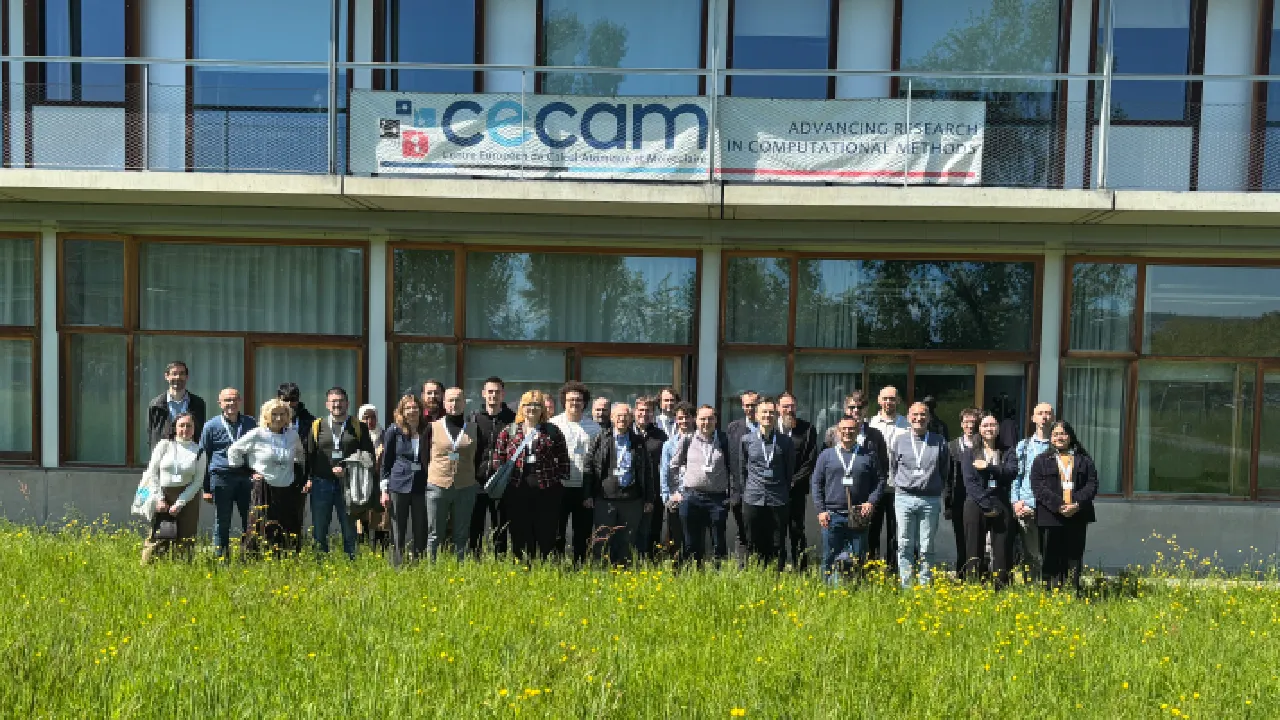
Last week in Lausanne, the CECAM Flagship Workshop brought together method experts, research data management (RDM) specialists, and simulation code developers to explore how FAIR data practices can better support theoretical spectroscopy.
The program combined scientific presentations, roundtable discussions, and dedicated collaboration slots, with participants sharing perspectives from infrastructure initiatives, cutting-edge scientific applications, and simulation software development. The format was designed to move beyond exchange toward joint, community-driven work.
The hands-on session was a particular highlight, with participants working directly with the nomad-simulations schema. It sparked lively discussions and valuable feedback, leading to concrete ideas for improving how complex methods and workflows are represented – from refining the structure of GW calculations to exploring more consistent descriptions of Green's functions and response properties. The session underlined both the substantial progress already achieved and clear opportunities ahead.
The workshop fostered an open and forward-looking atmosphere, strengthening connections between researchers, infrastructure developers, and code authors. It set the stage for continued, community-driven development of FAIR data standards to make theoretical spectroscopy data more accessible, reusable, and impactful.